How to Stop Losing After-Hours Service Calls (Without Hiring a Night Receptionist)

Workflow Pros
June 16, 2026 · 4 min read
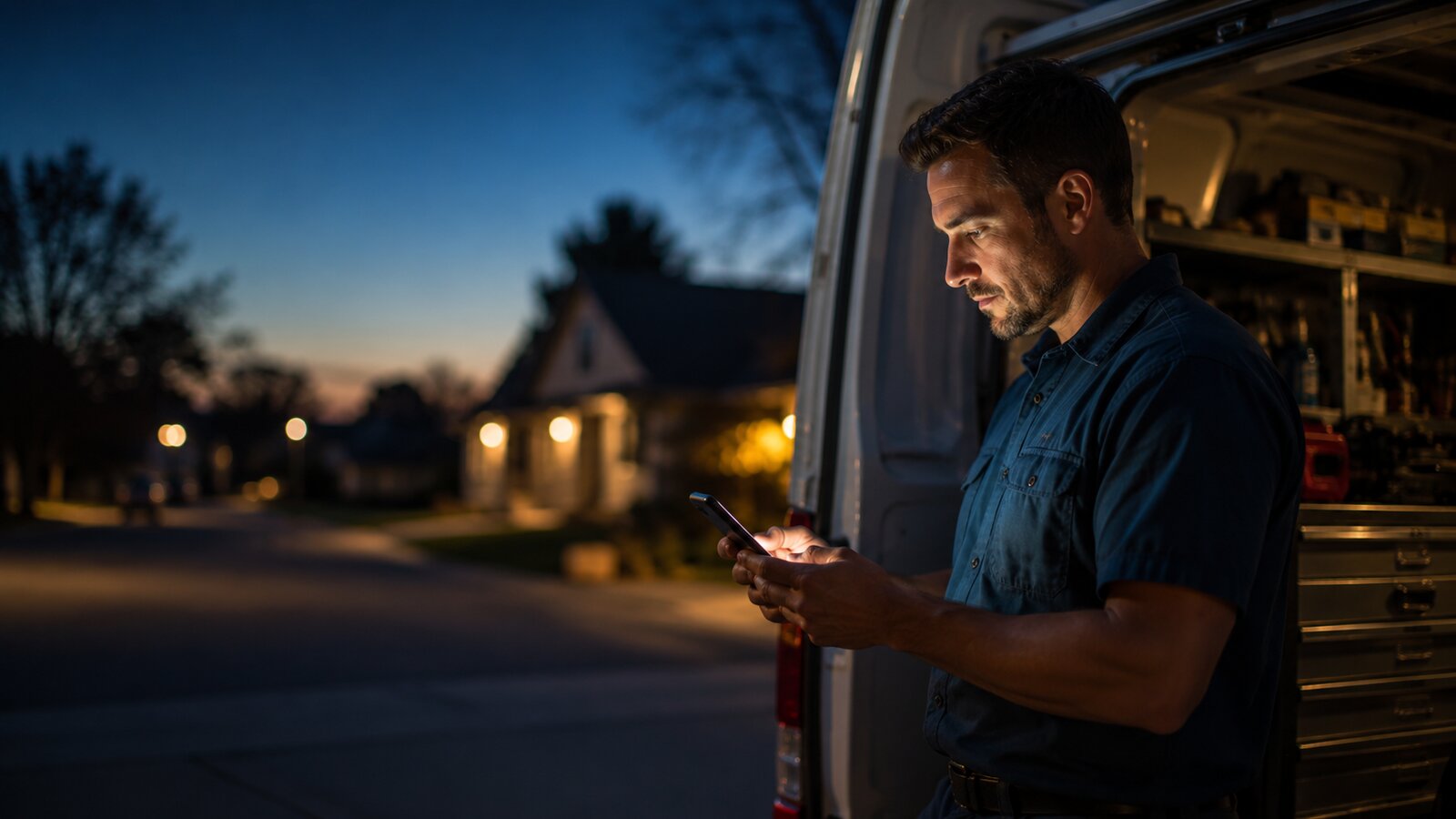
It's 7:42 p.m. A homeowner's water heater just gave out. They grab their phone, search "plumber near me," and call the first number. It rings, rings, and rolls to voicemail. They hang up and call the next company on the list — the one that picked up.
That call was yours. You just didn't know it happened.
For most home service businesses, after-hours answering isn't a nice-to-have — it's where revenue quietly leaks out every single night. The jobs don't show up as lost in any report. They simply never become jobs at all. If you run an HVAC, plumbing, electrical, or appliance repair company, this is one of the most expensive blind spots you have.
Here's why it happens, and how to fix it without staffing a phone overnight.
Why after-hours calls matter more than you think
A huge share of service calls come in outside of 9-to-5. Emergencies don't keep business hours — a burst pipe, a dead furnace in January, or an AC failure in a heat wave all happen at the worst possible time. On top of that, plenty of working homeowners only have time to call about that lingering repair after dinner or on a Saturday.
The problem is twofold. First, most callers won't leave a voicemail — they'd rather just dial the next company. Second, the homeowner who doesn't reach you usually hires whoever answers first. Speed wins. So every unanswered evening and weekend call isn't a deferred opportunity; it's a job handed to a competitor.
For a busy shop, capturing even a fraction of those missed after-hours leads can mean several extra jobs a week — without spending a dollar more on marketing.
Where the leak actually happens
After-hours misses tend to cluster in three places:
- In the field during the day. Your tech is under a sink or on a roof and can't pick up. The "after-hours" problem is really an "any time you're busy" problem.
- After you close. Evenings are prime time for homeowners who work during the day.
- Weekends and holidays. High emergency volume, lowest staffing.
If you only think about overnight, you'll miss the biggest leak — the calls that come in while your whole team is already working.
The options (and why most of them fall short)
- Voicemail. It feels like a safety net, but it isn't. Most people never leave a message, and the few who do expect a callback fast. By the time you check it, the job is gone.
- Hiring a night receptionist or answering service. This works, but it's expensive and uneven. A human answering service can take a message or book a basic appointment, but they don't know your schedule, your pricing, or which jobs are true emergencies. You're paying a monthly retainer plus per-minute fees for someone who often just takes down a name and number.
- Missed call text-back. A big step up: the moment a call goes unanswered, an automatic text fires to the caller — "Sorry we missed you, how can we help?" Because most homeowners already live in their text messages, this keeps the lead warm instead of letting it walk. It's cheap and effective for missed call follow-up, but on its own it still relies on someone replying and booking the job later.
- AI that answers and books 24/7. The most complete fix is software that actually answers the call, qualifies the lead, detects a real emergency, and books the job straight onto your dispatch board — at 2 a.m. or 2 p.m., whether you're asleep or elbow-deep in a crawl space. This is what real 24/7 call answering for contractors looks like: not just capturing a name, but turning the call into a scheduled, dispatched job.
How to set up after-hours handling that actually captures leads
You don't need to overhaul everything at once. A practical rollout looks like this:
- Measure the leak first. For one week, track how many inbound calls go unanswered and when. Most owners are shocked by the number. This is your baseline.
- Forward unanswered calls into one system. Whether the call comes in during a job or at midnight, it should land in the same place — not scattered across voicemails and sticky notes.
- Add instant text follow-up. Set an automatic reply within seconds that acknowledges the caller, gives a clear next step, and a timeline. Keep it short and human.
- Define what counts as an emergency. Decide which issues (no heat, no water, sparking panel) get escalated immediately versus booked for the next day. Your system should route accordingly.
- Connect it to your schedule. The goal is after-hours dispatch that ends with a booked job, not a message you have to chase the next morning.
- Review weekly. Look at how many after-hours leads were captured and converted. Refine your messages and routing from there.
The bottom line
Every contractor focuses on getting the phone to ring — more ads, more reviews, more trucks wrapped. But the cheapest growth available to most home service businesses isn't more calls. It's answering the ones you already get.
Fix your after-hours coverage and you'll book jobs your competitors never even knew existed.
Workflow Pros Team
Workflow Pros
Insights from the Workflow Pros team — practical advice on dispatch, invoicing, and growth to help home service contractors run smoother, scale faster, and get paid sooner.